Torah Reading: Numbers 11:23 – 12:16 (this study – 12:1-16) – Miriam and Aaron oppose Moses
Psalm 99 (a repeat from previous week)
Haftarah: Isaiah 50
Torah Reading: Numbers 11:23 – 12:16 (this study – 12:1-16) – Miriam and Aaron oppose Moses
Psalm 99 (a repeat from previous week)
Haftarah: Isaiah 50
This Saturday we celebrate Purim and read the whole Book of Esther.
Remember to “Boo” Haman, “Yay” Mordecai, and toast Esther until you can’t tell the difference! Oh yeah, and eat some Hamantaschen.
On Purim we also study history of Esau and the Amalekites, because Haman, the enemy of Mordecai and Esther, was a descendant of the Amalekites through Agag.
You can read our Purim Memo here.
Torah Reading: Numbers 11:16-22 (11:1-35) – Complaining
Psalm 99
Haftarah: Joel 2:16-24, 27
Torah Reading: Numbers 10:1 – 11:15 (10:1-36) – Trumpets, Journey from Sinai
Psalm 98
Haftarah: Isaiah 27:13 – 28:8, 16
Torah Reading: Numbers 8:1 – 9:23 – Lampstand, Levites, Passover, the Cloud
Psalm 97
Haftarah: Zechariah 4:1-9 + 6:12-13
Zechariah 2:14-?
Torah Reading: Numbers 7:48-89 – Gifts of the Princes
Psalm 96
Haftarah: Judges 5:14-22, 31
Torah Reading: Numbers 6:22 – 7:47 – Priestly Blessing and Gifts for the Altar
Psalm 95
Haftarah: 1 Kings 8:54-63
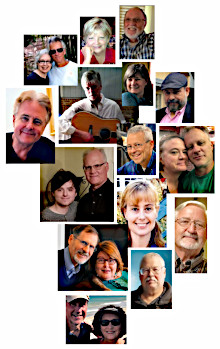
Our church community gathers throughout the week at different places on The Block, a neighborhood between downtown and the Lakewood area of Dallas, Texas, near the corner of Beacon and Columbia Ave. We'd love to have you join us!
We've posted a bundle of links to the songs of John Rutledge - including the Psalms of Ascent and the Hallel. Click on a song and sing along.
 If you can’t make it to The Block, you can listen to podcasts from the archive by our late elder, Ole Anthony, recorded at his daily Morning Bible Studies, available here.
Sundays
Note: There are no Sunday Morning meetings
Potluck Meal: We gather together for a potluck meal at 4 p.m. Sunday at The Lair, our community restaurant, located at 5644 Columbia Ave., downstairs.
'Big Group': Then we all gather from 5 - 6 p.m. Sunday for worship, singing and Bible study at the home of John and Joysanna Rutledge next door at 5640 Columbia Ave., upstairs. Contact John Rutledge jhnrutledge@gmail.com or call (214) 385-0230.
Spanish-language Bible Study
There is a Spanish-language Bible Study led by Pete Evans, Sundays at 8 p.m. Contact Pete at pete@trinityfi.org or call (214) 738-3349.
Tuesdays
We usually have a pot-luck meal at 5:30 p.m. in the Lair (5644 Columbia Ave.) followed by Bible study at 6:30 p.m. Tuesdays at Gary and Judy Buckner's home at 5632 Columbia Ave. Contact Gary Buckner, buckner.construction@gmail.com or call (214) 682-8007.
Fridays
At 7 p.m. Fridays, Bible Study taught by Pete Evans at 5640 Columbia Ave., downstairs. Contact Pete Evans, pete@trinityfi.org or call (214) 738-3349
E-mail us: blockoncolumbia@gmail.com