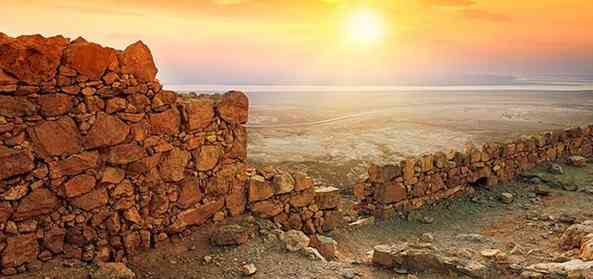
After completing our 3 1/2-year cycle of readings in the Torah, we decided to continue with the historical books that follow, beginning with Joshua.
After completing our 3 1/2-year cycle of readings in the Torah, we decided to continue with the historical books that follow, beginning with Joshua.
The coming of Jesus into the world was accompanied by intense anticipation. The prophet Daniel’s timeline for the appearance of the Messiah to defeat Israel’s oppressors and restore the kingdom was almost up. But the prophecies and scripture references gave seemingly conflicting versions of the Messiah’s mission and character.
Rosh Hashanah, also called the Feast of Trumpets, begins the Days of Awe. For 10 days between this feast and Yom Kippur (the Day of Atonement), Israel trembled in self-reflection and repentance as, according to tradition, their lives hung in the balance while the Book of life was opened in heaven.
Rosh Hashanah, which means “head of the year” in Hebrew, also marks the creation of the world and the beginning of the Jewish new year.
The blowing of the shofar or ram’s horn is a feature of this celebration. One traditional Rosh Hashanah reading is the fall of Jericho in Joshua 6, in which blowing the shofar causes the city walls to fall down. Crucial to the story is the aid Rahab the harlot gave to the Israeli spies, related in Joshua 2:1-24, and the “scarlet thread” that pictured her salvation.
Many scholars believe Jesus was born around the time of this feast, and it represents the new birth of believers, too.
The corrupt priests in Malachi’s day were literally robbing God of the tithes while complaining that He is unjust. The prophet enumerates their sins, and warns that God will “suddenly come to His Temple” to purify and purge the priesthood. First He will send a messenger, Elijah the prophet. But if they repent and “bring all the tithes into the storehouse,” they will be blessed beyond measure.
The prophet Malachi delivers a number of complaints God has against Israel’s priesthood. They were bringing blemished, sick or lame animals for sacrifice, which contradicted commandments in the Torah. That showed they considered God’s table “contemptible.” As a consequence, God says He is turning to the Gentiles, looking toward the days of Messiah.
Ezra and Nehemiah arrive in Jerusalem about 60 years after the Temple has been rebuilt. They find a serious problem. Many prominent Jews have taken wives from the idol-worshipping Samaritans and surrounding peoples. The children of these unions barely speak Hebrew and know little about Israel’s God. The solution is harsh. The repentant men must separate from their foreign wives and children born from those marriages.
When the Jews restart construction on the Temple, the new Persian governor is suspicious. He writes a letter to Darius the king asking him to verify the Jews’ claim that Cyrus had given them permission to build. Darius had already given Zerubbabel his blessing, but he ordered a search of the archives and found Cyrus’ original decree. The Temple was finally completed, and the builders rejoiced at its dedication. Then a month later they celebrated Passover for the first time in many decades.
When a delegation asks if they should continue to mourn the destruction of Jerusalem by observing the Fast of Ab, the prophet Zechariah receives an answer from God. First He chastises them for not simply following His commandments instead of observing man-made rituals. Then, in a vision of the Times of Messiah, he describes the fasts as transformed into feasts of joy and gladness.
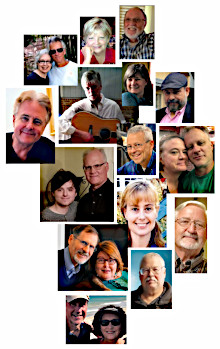
Our church community gathers throughout the week at different places on The Block, a neighborhood between downtown and the Lakewood area of Dallas, Texas, near the corner of Beacon and Columbia Ave. We'd love to have you join us!
We've posted a bundle of links to the songs of John Rutledge - including the Psalms of Ascent and the Hallel. Click on a song and sing along.
 If you can’t make it to The Block, you can listen to podcasts from the archive by our late elder, Ole Anthony, recorded at his daily Morning Bible Studies, available here.
Sundays
Note: There are no Sunday Morning meetings
Potluck Meal: We gather together for a potluck meal at 4 p.m. Sunday at The Lair, our community restaurant, located at 5644 Columbia Ave., downstairs.
'Big Group': Then we all gather from 5 - 6 p.m. Sunday for worship, singing and Bible study at the home of John and Joysanna Rutledge next door at 5640 Columbia Ave., upstairs. Contact John Rutledge jhnrutledge@gmail.com or call (214) 385-0230.
Spanish-language Bible Study
There is a Spanish-language Bible Study led by Pete Evans, Sundays at 8 p.m. Contact Pete at pete@trinityfi.org or call (214) 738-3349.
Tuesdays
We usually have a pot-luck meal at 5:30 p.m. in the Lair (5644 Columbia Ave.) followed by Bible study at 6:30 p.m. Tuesdays at Gary and Judy Buckner's home at 5632 Columbia Ave. Contact Gary Buckner, buckner.construction@gmail.com or call (214) 682-8007.
Fridays
At 7 p.m. Fridays, Bible Study taught by Pete Evans at 5640 Columbia Ave., downstairs. Contact Pete Evans, pete@trinityfi.org or call (214) 738-3349
E-mail us: blockoncolumbia@gmail.com