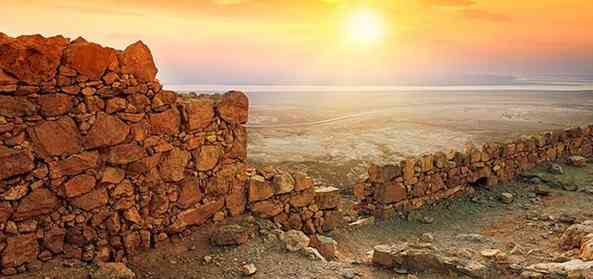
After completing our 3 1/2-year cycle of readings in the Torah, we decided to continue with the historical books that follow, beginning with Joshua.
After completing our 3 1/2-year cycle of readings in the Torah, we decided to continue with the historical books that follow, beginning with Joshua.
A new king, Belshazzar, rules Babylon, and he throws a lavish drinking party using sacred vessels looted from the Jewish Temple. God responds with a message written on the wall – MENE, MENE, TEKEL, UPHARSIN! Daniel interprets it as, “God hath numbered thy kingdom, and finished it. Thou art weighed in the balances, and art found wanting. Thy kingdom is divided, and given to the Medes and Persians.”
Babylonian King Nebuchadnezzar has another dream, which the prophet Daniel deciphers. Because of his pride, the king will spend seven years of insanity, living like a wild beast. The dream comes true, and after the king regains his sanity, he praises God as supreme ruler on the earth and in heaven.
In January, millions of people make resolutions hoping to change their habits or accomplish something they desire in the coming year. But the scriptures have stern warnings about leaning on our own “resolve” instead of bringing desires and concerns to God in prayer.
Jewish expectation of a coming Messiah was high when Jesus was brought to the Temple to be presented (Luke 2:25). A pious man named Simeon had been “waiting for the consolation of Israel” and knew he had found Him when he saw the baby Jesus. The prophet Isaiah had spoken of this consolation or comfort centuries before.
This week we’ll look at Luke 2:1-20; Matthew 1:18-2:23 and more aspects of the Hanukkah/Christmas season. When and why did Christmas become recognized as the day of Christ’s birth? What was the Star of Bethlehem, who were the Magi, and why were shepherds part of Christ’s birth announcement?
Notes on “When was Jesus Born?”
The eight-day feast of Hanukkah, a festival of lights, occurs in the darkest time of year. It commemorates the rededication of the Temple in 165 B.C. after it was cleansed by Judas Maccabeus when the Jews prevailed against the Seleucid Greeks of Syria. In the New Testament it is referred to as the Feast of Dedication.
Jewish tradition says that when the special oil for the Temple lamp stand could not be obtained in time, Judah Maccabeus took a step of faith (and a risk) by lighting the lamp with only one day’s supply of oil. It burned miraculously for eight days until the extra oil arrived.
Many scholars place the time of the Annunciation of the angel to Mary and the conception of Christ (rather than his birth) at this time of year, and the festival contains numerous types and foreshadowings of Christ’s coming.
God reveals the dream and its interpretation to Daniel. Nebuchadnezzar dreamed of a statue in the form of a man that represented Babylon and future world kingdoms. A stone smashes the statue’s feet, which are weakened by being a mixture of iron and clay. This turns out to be a prophecy of Christ’s kingdom overcoming all the other world’s powers and authorities. Nebuchadnezzar, amazed, declares Daniel’s God as supreme and rewards him with high office.
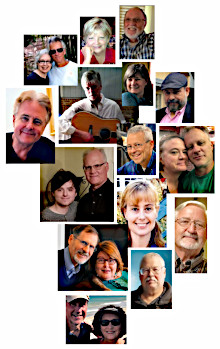
Our church community gathers throughout the week at different places on The Block, a neighborhood between downtown and the Lakewood area of Dallas, Texas, near the corner of Beacon and Columbia Ave. We'd love to have you join us!
We've posted a bundle of links to the songs of John Rutledge - including the Psalms of Ascent and the Hallel. Click on a song and sing along.
 If you can’t make it to The Block, you can listen to podcasts from the archive by our late elder, Ole Anthony, recorded at his daily Morning Bible Studies, available here.
Sundays
Note: There are no Sunday Morning meetings
Potluck Meal: We gather together for a potluck meal at 4 p.m. Sunday at The Lair, our community restaurant, located at 5644 Columbia Ave., downstairs.
'Big Group': Then we all gather from 5 - 6 p.m. Sunday for worship, singing and Bible study at the home of John and Joysanna Rutledge next door at 5640 Columbia Ave., upstairs. Contact John Rutledge jhnrutledge@gmail.com or call (214) 385-0230.
Spanish-language Bible Study
There is a Spanish-language Bible Study led by Pete Evans, Sundays at 8 p.m. Contact Pete at pete@trinityfi.org or call (214) 738-3349.
Tuesdays
We usually have a pot-luck meal at 5:30 p.m. in the Lair (5644 Columbia Ave.) followed by Bible study at 7 p.m. Tuesdays at Gary and Judy Buckner's home at 5632 Columbia Ave. Contact Gary Buckner, buckner.construction@gmail.com or call (214) 682-8007.
Fridays
At 7 p.m. Fridays, Bible Study taught by Pete Evans at 5640 Columbia Ave., downstairs. Contact Pete Evans, pete@trinityfi.org or call (214) 738-3349
E-mail us: blockoncolumbia@gmail.com